100 African Black Girls Coloring Pages for Creative Projects
A coloring book featuring 100 African Black girls offers more than just pages to fill with color. It provides a visual library of diverse hairstyles, skin tones, cultural patterns, and everyday moments that can be adapted for multiple creative and business purposes. Whether you are building a KDP publishing catalog, designing educational materials, or seeking fresh inspiration for personal projects, this collection gives you a ready-made foundation to work from.
What the Collection Offers
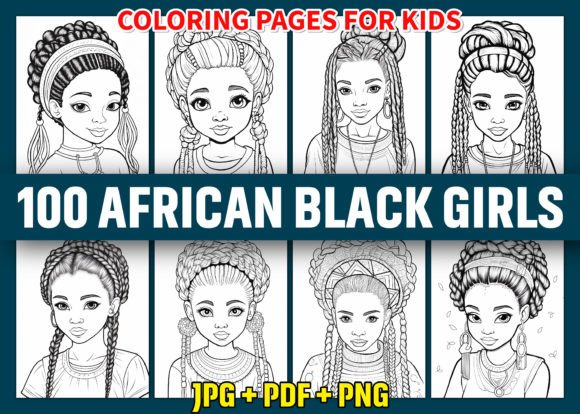
The set includes 100 unique designs in JPEG, PNG, and PDF formats, all at 300 DPI and sized A4 (8.5×11 inches). This means you can print them directly, edit them digitally, or repurpose individual illustrations for other formats. The illustrations focus on African Black girls in various poses, settings, and expressions, which makes the collection versatile for different age groups and contexts — from young children to adults who enjoy mindful coloring.
Because the files are high resolution and print-ready, you can use them immediately without heavy editing. The zip file contains organized folders, so locating specific images or formats is straightforward. For anyone working on Amazon KDP, the layouts are already tested on that platform, which reduces the guesswork when preparing your upload.
Building a KDP Coloring Book Series
If you are a self-publisher, this collection can form the base of a single volume or a series. Volume 1 with 100 pages is substantial enough to list as a standalone product, but you can also split the designs into smaller themed books — for example, “African Black Girls at Play,” “Natural Hair Styles Coloring Book,” or “Cultural Celebrations.” Since the files are editable in software like Canva, Photoshop, or GIMP, you can rearrange pages, add your own cover designs, and include bonus activities such as mazes or word searches to increase perceived value.
When uploading to KDP, remember that each interior file needs to be flattened and formatted as a single PDF. The provided PDF is ready for this purpose, but you may want to add a title page, copyright notice, or “This book belongs to” section to personalize it for buyers.
Educational and Homeschool Resources
Teachers, tutors, and homeschooling parents can use these pages beyond simple coloring. Each illustration can spark discussions about identity, representation, and cultural pride. You can create lesson plans that pair coloring with storytelling — ask children to name the character, imagine where she lives, or write a short paragraph about her day. For younger learners, the bold lines and clear shapes help with fine motor skills and color recognition.
Because the collection includes 100 different images, you have enough material for an entire school term without repeating the same design. Print them on demand, or load them onto a tablet for digital coloring using apps like Procreate or Adobe Fresco.
Digital Product Variations
Beyond print, you can adapt the PNG or JPG files for digital products. Create a set of “Color by Number” worksheets by adding numbered sections to the illustrations. Turn individual pages into printable wall art by removing the background and adding inspirational quotes. If you sell on platforms like Etsy, Teachers Pay Teachers, or Creative Market, you can offer the set as a standalone digital download or bundle it with other diversity-themed materials.
For bloggers and social media content creators, the images can be used as freebies to grow your email list. Offer a sample pack of five to ten pages in exchange for a subscription. This works especially well if your content focuses on parenting, early childhood education, or multicultural resources.
Kids vs. Adults
Although the collection is labeled for kids, the designs vary in complexity. Some pages have large, simple shapes ideal for toddlers and preschoolers, while others include detailed patterns and backgrounds that appeal to older children and adults. If you are creating a product specifically for adults, you can curate the more intricate illustrations and market the book as a relaxation or mindfulness tool. Add a subtitle like “Stress Relief for Teens and Adults” to signal the target age group.
For children’s editions, consider grouping pages by theme — hairstyles, family scenes, outdoor play, or traditional clothing. This helps parents and kids find relevant images quickly and makes the book feel more curated.
Cultural Relevance and Representation
One of the strongest selling points of this collection is its focus on Black girls. In a market where diverse coloring books are still underrepresented, this set fills a real need. When marketing, emphasize the variety of skin tones, hair textures, and cultural elements. You are not just selling a coloring book — you are offering a tool for affirmation and identity building.
If you are a creator from outside the culture, approach the material with respect. Avoid stereotyping or oversimplifying features. The illustrations themselves appear to be designed thoughtfully, but as you adapt them, keep the representation authentic. This builds trust with your audience and aligns with E-E-A-T principles.
Practical Tips for Keeping Results Clean and Professional
- Check resolution before printing. The files are 300 DPI, which is standard for print. If you resize them, maintain the aspect ratio to avoid stretching or pixelation.
- Use a consistent cover style. If you plan to sell multiple volumes, design covers that look like a series — same font, similar layout, matching color palette. This helps with brand recognition on Amazon.
- Test on KDP before publishing. Use the Kindle Create tool or Adobe Acrobat to preview your interior. Make sure margins are correct and no content falls into the bleed zone.
- Add variety without clutter. You can include a few bonus pages like a certificate of completion or a “color your own cover” activity, but keep the majority of the book focused on the illustrations.
- Organize your files early. Rename each image with a descriptive title (e.g., “girl_with_braids_01”) so you can find specific designs later. This is especially helpful when creating multiple products from the same collection.
Realistic Use Cases for Different Roles
Freelance designers can license the illustrations as part of a larger client project — for example, creating a custom activity book for a nonprofit that focuses on youth empowerment. The ready-made images save hours of drawing time, and the 300 DPI format meets professional standards.
Small business owners who sell printed goods at fairs or online shops can produce physical coloring books in small batches using print-on-demand services. Because the files are print-ready, you can list a new product in a day.
Hobbyists and parents can simply enjoy coloring with their children. The PDF format allows you to print a single page as many times as you like, so multiple kids can color the same design without conflict. This is also useful for group activities at birthday parties or community events.
Making the Most of the Format
The A4 size is standard for both home printers and commercial printing. If you plan to sell a smaller trim size, you can scale the images down within a new document — just be mindful that reducing too much might make fine details hard to color. For most purposes, keeping the original size is the simplest path.
Because you receive multiple formats, you have flexibility. Use the PNG files for digital distribution (they have transparent backgrounds where applicable) and the JPG files for quick printing. The PDF is your all-in-one file for uploads. Storing all three in your backup drive means you can serve different customers without recreating anything.
Final Thoughts on This Resource
The 100 African Black Girls Coloring Pages collection is a practical asset for anyone creating content around diversity, representation, or simple creative fun. Whether you are launching a KDP business, building classroom materials, or looking for a meaningful gift, the volume and quality of the designs give you room to experiment. Keep your audience in mind, maintain organized files, and use the illustrations as a springboard for projects that celebrate Black girls in all their variety.