Cute Mermaid Coloring Pages for Kids
There is something magnetic about mermaids that captures the imagination of children and adults alike. With their flowing tails, ocean companions, and underwater castles, these mythical beings offer endless creative possibilities. The Cute Mermaid Coloring Pages for Kids collection brings this magic to life in a practical, immediately usable format for publishers, designers, and creative entrepreneurs. Whether you are launching a new title on Amazon KDP, building a portfolio of children’s activity books, or looking for a reliable design resource for personal projects, this set of 100 original illustrations is worth a closer look.
This article covers what makes these pages stand out visually, where they work best in commercial and creative contexts, and how to evaluate them for your specific project needs. You will also find honest observations about readability, file preparation, and the realities of selling coloring books on the Kindle Direct Publishing platform.
Visual Style and Creative Personality of the Collection
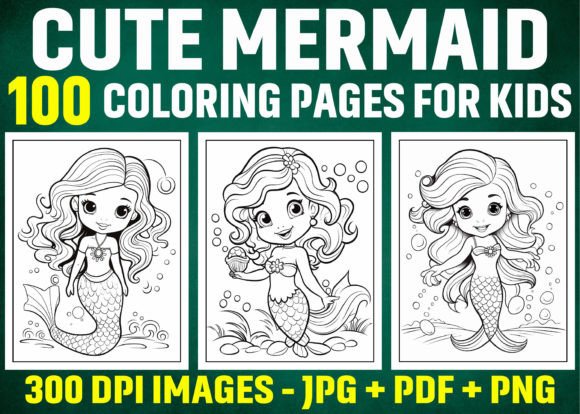
The first thing you notice when flipping through the Cute Mermaid Coloring Pages for Kids is the consistent tone. These are not generic ocean scenes with a mermaid drawn in as an afterthought. Each page feels intentional, with clear linework, approachable detail levels, and a playful yet structured composition. The mermaids themselves have expressive faces, varied hairstyles, and tails decorated with scales, fins, and sometimes shells or seaweed accents. Supporting characters such as dolphins, sea turtles, jellyfish, and starfish appear naturally throughout the pages, turning each spread into a complete underwater vignette.
The style leans toward modern typography and illustration trends that appeal to young children: rounded shapes, soft proportions, and enough whitespace to keep the experience stress-free. Dark areas are minimal, so kids do not struggle with heavy fills, and the lines are thick enough to guide crayons or markers without frustration. For a display font might want bold, playful lettering on a book cover, these illustrations match that energy visually. They work like a script font would in a greeting card—friendly, approachable, and full of personality without being complicated.
From a design perspective, the 300 DPI resolution is a serious advantage. Each JPG, PNG, and PDF file holds up well when printed at A4 or 8.5 × 11 inches. As any experienced commercial font user knows, resolution matters when you scale artwork for different formats, and these pages are built to handle that. The black-and-white line art is clean, with no visible compression artifacts or smudged edges. This matters whether you are uploading to KDP, printing at home, or handing files off to a professional press.
Where These Coloring Pages Shine in Publishing and Design
The primary use case is obvious: children’s coloring books. But the Cute Mermaid Coloring Pages for Kids collection offers more flexibility than the name suggests. Publishers working on editorial design for activity books can pull individual pages to create sampler editions, themed bundles, or series-based content. If you are building a brand around ocean, fantasy, or preschool learning themes, these illustrations integrate well into a broader brand identity toolkit. They do not scream “generic clip art” because the original artwork carries a consistent voice across all 100 pages.
Beyond books, the logo design potential is worth noting. While you would not use a coloring page as a logo directly, the style can inspire iconography, mascots, or decorative elements for a children’s brand. A stylized mermaid tail or a smiling starfish from the collection could be adapted into a simple creative font or mark for a daycare, swim school, or toy line. For packaging design, these illustrations could appear on the back of a snack box, the side of a lunch bag, or the cover of a kid-friendly journal. The visual language is commercial-friendly without feeling cold or overly polished.
Digital creatives also have room to experiment. Web design for a children’s app or an educational subscription box could incorporate scanned or photographed elements from the coloring pages. Social media graphics featuring partially colored pages can showcase before-and-after results, encouraging engagement from parents and teachers. The handwritten font aesthetic of the linework makes the pages feel personal, which resonates well in content marketing aimed at families. If you are selling printables on Etsy or Gumroad, these pages are ready to go with minimal editing needed.
From a font pairing perspective, think about how the cover and interior titles complement the illustration style. A rounded sans serif like Poppins or a playful serif like Fredoka One would match the friendly, open feel of the mermaids. Avoid heavy blackletter or ultra-condensed sans serif font choices, as they would clash with the airy underwater theme. The goal is consistency: the artwork, the typography, and the layout should feel like they belong to the same world. That is what builds trust with buyers and keeps young users engaged.
How These Pages Influence Readability, Engagement, and Brand Trust
Coloring books are not about reading in the traditional sense, but readability still matters. A page that is too cluttered overwhelms a child. A page that is too sparse feels boring and fails to hold attention. The Cute Mermaid Coloring Pages for Kids strike a balance that works well for ages three to eight. The large, clearly defined shapes allow even inexperienced colorists to stay inside the lines, while the variety of characters and backgrounds provides enough novelty to sustain interest over multiple sessions.
Visual hierarchy is handled well here. Each page has a clear focal point—usually the main mermaid—with secondary elements arranged around her in a way that guides the eye naturally. This is not accidental; it reflects thoughtful composition planning. For a typeface placed on the same page, you would want similar attention to where the eye lands first. In a coloring book, this hierarchy keeps children from feeling lost or frustrated. They know exactly where to start coloring, and the rest of the page fills in around that anchor.
Brand perception benefits directly from this quality. When a parent or teacher sees crisp, original artwork in a coloring book, they associate that level of care with the brand behind it. Whether you are publishing under your own name, a studio imprint, or a white-label business, the commercial font and illustration choices you make signal professionalism. Cheap, blurry, or overly generic artwork undermines trust. This collection avoids that pitfall by delivering consistent line quality and a cohesive visual identity across all 100 pages.
Consistency across a series matters even more if you plan to release multiple volumes. A child who enjoyed Volume 1 will recognize the style in Volume 2, which builds loyalty and repeat purchases. That is exactly the kind of brand recognition that separates successful KDP titles from one-off experiments. The modern typography and illustration approach used here is distinctive enough to stand out in search results but versatile enough to fit different themes within the mermaid niche.
Evaluating Your Project Fit
Before you download the .zip file, think about your specific needs. If you are publishing on KDP, the A4 and 8.5 × 11 inch sizes are standard, so these pages will fit trim requirements without awkward scaling. The 300 DPI resolution ensures Amazon’s print engine will not reject your files for low quality. If you plan to offer a paperback edition, the PDF file format is ready to upload after you add your cover and any front or back matter. The JPG and PNG versions give you flexibility if you want to edit individual pages in Photoshop, Canva, or Affinity.
Consider whether you need all 100 pages for your project. A smaller activity book might use 30 to 50 pages, while a comprehensive coloring book could use the full set. You can also split the collection across multiple volumes if you want to launch a series. The files are delivered as separate images, so you can pick and choose without destroying the original set. Keep the original .zip archive backed up in case you need to regenerate a file later.
Testing Print and Screen Readability
Print a sample page at full size before committing to a full run. Look for areas where thin lines might fade at smaller sizes or where heavy clustering of details could cause bleed-through with markers. The line thickness in these pages is generally child-friendly, but testing on your intended paper stock is the only way to be sure. If you are using the pages digitally, check how they render on tablet screens. The PNG format preserves transparency if you want to overlay them on colored backgrounds in a digital coloring app.
Licensing and Commercial Use on KDP
The Cute Mermaid Coloring Pages for Kids collection comes with a clear commercial license for Amazon KDP. That means you can use these designs in coloring books you publish on the platform without worrying about copyright issues. The note in the product description states “you can sell on it only Amazon Kindle Direct Publishing,” so respect that limitation. If you plan to sell on other platforms like Etsy, Gumroad, or IngramSpark, confirm with the creator whether an extended license is available. Most high-quality design asset sellers offer additional licensing options if you ask.
Keep your own records: save the purchase receipt, the license document if provided, and the original download. This protects you if Amazon or another platform requests proof of usage rights. It is a small step that saves major headaches later.
Font Pairing and Cover Design Suggestions
Your cover is the first thing potential buyers see on Amazon. Pair these underwater illustrations with a serif font for a classic, storybook feel, or a sans serif font for a clean, modern look. A script font can work for the title if it remains legible at thumbnail size—Amazon displays covers very small on mobile devices. Avoid script fonts with thin strokes or elaborate flourishes that disappear at 100 pixels wide. Test your mockup at actual Amazon search size before finalizing.
If you are adding interior titles, section headers, or activity instructions, choose a handwritten font that matches the playful tone of the mermaids. Keep body text simple and readable. The illustrations are the star of the show, so typography should support them, not compete for attention.
Final Observations on Using Design Assets for Creative Projects
The Cute Mermaid Coloring Pages for Kids collection represents a solid investment for anyone serious about publishing children’s activity books or building a brand around whimsical, ocean-themed content. The 100-page count gives you room to curate, the file formats cover both print and digital workflows, and the commercial license removes guesswork for KDP sellers. What makes this set particularly useful is the consistent visual quality across every page. You will not find one beautifully drawn mermaid followed by nine pages of filler. Each illustration carries the same level of care, which is rare in bulk design assets.
For content creators who value efficiency, having files at 300 DPI in JPG, PNG, and PDF means you spend less time converting and more time building your product. For publishers testing a new niche, this collection gives you enough material to launch a single title or a full series without commissioning custom artwork upfront. And for entrepreneurs looking to scale, the ability to reuse and remix these pages across multiple projects—within the license terms—makes them a cost-effective resource.
If you are on the fence, start with a small project. Use 20 pages for a giveaway or a promotional sampler, gauge audience response, and then decide whether to scale up. The files are ready to go, and the only real cost is your time to assemble, publish, and market the book. That low-risk entry point is exactly why high-quality design assets like this have become essential tools in the modern publishing toolkit.