Mastering Scissor Skills with 2D Shape Scissor Skill 15 Pages Vol-2: A Complete Teaching Resource
Learning to use scissors is a foundational milestone in early childhood development. It requires hand strength, bilateral coordination, visual perception, and focused attention. For teachers, homeschool parents, and caregivers, finding engaging, structured, and easy-to-use materials to teach scissor skills can be a challenge. That is where the 2D Shape Scissor Skill 15 Pages Vol-2 comes in—a thoughtfully designed printable resource that makes teaching scissor skills straightforward, enjoyable, and effective.
This article explores everything you need to know about this resource: what it includes, why scissor skills matter, how to use the pages effectively, and how this particular volume can support your students or children in building confidence and precision with scissors. Whether you are a seasoned educator or a new parent looking for structured activities, you will find practical insights and actionable guidance here.
Why Scissor Skills Are Essential for Early Development
Before diving into the specifics of the 2D Shape Scissor Skill 15 Pages Vol-2, it is helpful to understand why scissor skills deserve dedicated teaching time. Cutting with scissors is not just about crafting—it supports multiple areas of development.
Fine Motor Development
Cutting requires the small muscles in the hands and fingers to work together. Opening and closing scissors, guiding the blade along a line, and controlling the paper all strengthen the hand muscles needed later for writing, drawing, and buttoning clothes.
Bilateral Coordination
Using scissors requires one hand to cut while the other hand holds and turns the paper. This coordinated use of both sides of the body is a key developmental skill that supports many daily tasks.
Visual Perception and Focus
Following a printed line or shape with scissors trains the eyes to guide the hands. This visual-motor integration is essential for reading, math, and sports. Scissor activities also build sustained attention and task completion habits.
Confidence and Independence
When children successfully cut out a shape, they experience a sense of accomplishment. This boosts self-esteem and encourages them to tackle more complex tasks independently.
What Is Inside 2D Shape Scissor Skill 15 Pages Vol-2?
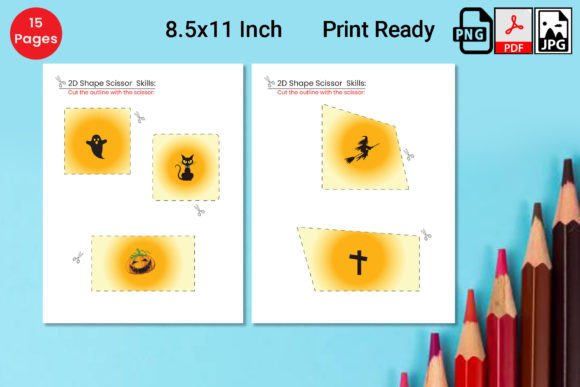
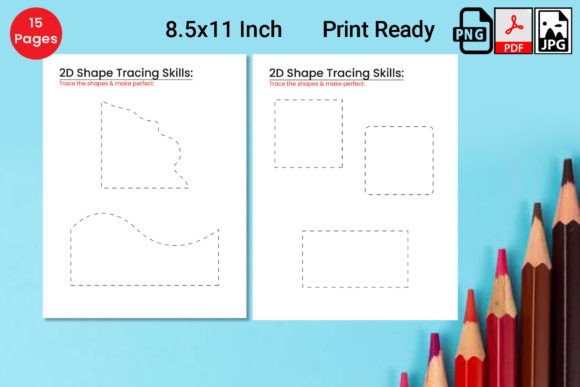
This resource is a complete, ready-to-use collection of 15 unique scissor practice pages focused on 2D shapes. It is designed for educators and parents who want a structured, no-prep way to teach cutting skills. Here is exactly what you get:
- 15 PDF pages – Print-ready high-resolution files that work perfectly on any home or school printer.
- 15 JPG files – Individual image files for each page, useful for digital display or custom printing.
- 15 PNG files – Transparent background versions suitable for use in digital teaching platforms or for layering into other materials.
- Size 8.5 x 11 inches – Standard letter size, easy to print and handle for small hands.
- 300 dpi resolution – Crisp, clear lines that are easy for children to see and follow.
- Black and white design – No color ink required; cost-effective and distraction-free.
- Unique and creative templates – Each page offers a different set of 2D shapes, keeping practice varied and engaging.
- Ready to print – Open, print, and use immediately. No additional preparation needed.
- KDP tested and Amazon KDP compatible – If you are a publisher or content creator, this interior is optimized for Kindle Direct Publishing.
- Easy to use – Clear layout and progressive difficulty make it suitable for beginners and intermediate learners.
All files come in a single organized package, making it simple to access whichever format you need. The black-and-white design also allows children to color the shapes after cutting, adding an extra layer of creativity and engagement.
How These Sheets Help Students Improve Scissor Skills
The 2D Shape Scissor Skill 15 Pages Vol-2 is not just a collection of random cutting activities. Each page is intentionally designed to target specific cutting challenges while keeping children motivated.
Progressive Skill Building
The shapes included in this volume—such as circles, squares, triangles, rectangles, ovals, diamonds, pentagons, hexagons, stars, and more—are arranged in a way that allows students to start with simpler straight lines and curves before moving to more complex angles and corners. This natural progression helps children build confidence step by step.
Shape Recognition Integrated with Cutting Practice
As children cut out each shape, they also reinforce their knowledge of 2D geometric forms. This dual-purpose design means you are teaching both scissor skills and early geometry concepts simultaneously. You can ask students to name the shape before cutting, or sort the cut-out shapes by type afterward.
Focus on Precision and Control
Unlike free-form cutting, these templates require children to follow specific outlines. This teaches them to control the scissors with intention, improving accuracy over time. The clear 300 dpi lines make it easy for young eyes to track the cutting path.
Creative Extension Activities
Because the pages are black and white, students can color the shapes after cutting. This extends the activity and allows for creative expression. You can also use the cut-out shapes for collages, pattern-making, or math manipulatives in later lessons.
How to Teach Scissor Skills Using These Sheets
If you are new to teaching scissor skills, here is a simple step-by-step approach using the 2D Shape Scissor Skill 15 Pages Vol-2:
- Start with proper grip and safety – Show children how to hold scissors with the thumb in the small loop and fingers in the larger loop. Emphasize cutting away from the body and keeping fingers clear of the blades.
- Choose an easy shape first – Begin with a page that has large, simple shapes like circles or squares. These require fewer direction changes and are less frustrating for beginners.
- Model the cutting motion – Demonstrate how to open and close the scissors smoothly while following the line. Let children practice opening and closing without paper first if needed.
- Encourage proper paper handling – Teach children to hold the paper with their non-dominant hand and turn it as they cut, rather than moving the scissors around awkwardly.
- Praise effort, not just accuracy – Celebrate the attempt and improvement. It is normal for young children to cut outside the lines at first. Focus on progress.
- Progress to more complex shapes – As confidence grows, move to pages with smaller shapes, sharper corners, or multiple shapes on one page.
- Use the cut-outs for follow-up activities – Have children glue their shapes onto paper, sort them by type, or use them to create a picture. This reinforces the learning and adds fun.
Who Can Benefit from This Resource?
The 2D Shape Scissor Skill 15 Pages Vol-2 is versatile and suitable for a wide range of settings:
- Preschool and kindergarten teachers – Integrate scissor practice into your fine motor centers or morning work routines.
- Homeschooling parents – Use these sheets as part of your weekly skills practice. They require minimal prep and are easy to adapt for multiple children.
- Occupational therapists – The structured, repetitive nature of cutting shapes makes this resource ideal for therapy sessions focused on fine motor and visual-motor skills.
- Daycare and after-school programs – Keep children engaged with purposeful, screen-free activities that build real-world abilities.
- Content creators and publishers – Because this interior is KDP tested and Amazon KDP compatible, you can use it as a low-content or medium-content book for publishing on Amazon.
Common Misunderstandings About Teaching Scissor Skills
Many educators and parents assume that children will naturally learn to cut with scissors through casual exposure. While some children do pick it up quickly, others need structured guidance. Another common misunderstanding is that scissor practice must be done with expensive or elaborate materials. In reality, simple black-and-white templates like those in this volume are often more effective because they reduce visual clutter and help children focus on the cutting line.
Some also believe that left-handed children cannot use standard scissors effectively. While left-handed scissors are helpful, many left-handed children can adapt to right-handed scissors with practice. The key is to provide plenty of opportunities to cut, regardless of hand dominance.
Where This Resource Fits in Modern Education and Daily Life
In today's digital age, hands-on fine motor activities are more important than ever. Children spend increasing amounts of time on tablets and smartphones, which do not develop the same hand strength and coordination as cutting, drawing, and building. Resources like the 2D Shape Scissor Skill 15 Pages Vol-2 offer a simple, screen-free way to build essential physical skills.
Furthermore, many parents and educators are turning to printable resources for their flexibility and low cost. With this volume, you can print as many copies as you need for your classroom or family, making it an economical choice for repeated practice.
If you are a teacher looking for reliable, tested materials, or a parent wanting to support your child's development at home, this interior is designed with your needs in mind. The unique templates keep children engaged, while the clear layout makes instruction easy for you.
How to Purchase and Use This Interior
If you are ready to teach scissor skills effectively, you can purchase the 2D Shape Scissor Skill 15 Pages Vol-2 interior. Once downloaded, you can print the PDF pages directly or use the JPG and PNG files for digital instruction. The files are compatible with any standard printer and can be used in classroom settings, therapy sessions, or at home.
After purchase, simply unzip the file folder, select the format you need, and start teaching. The black-and-white design means no expensive ink cartridges are required, and the 8.5 x 11 size fits standard paper perfectly. You can also bind the pages into a workbook or use them as individual handouts.
For those interested in publishing on Amazon KDP, this interior has been tested and approved, so you can create your own scissor skill book with confidence.
Explore Other Products for Continued Learning
If you find this volume helpful, consider exploring other products from the same creator. There are additional scissor skill volumes, shape recognition resources, and fine motor activities available that build on the same principles. Each product is designed with the same attention to quality, ease of use, and educational value.
Whether you are teaching one child at home or a classroom of thirty, having a library of ready-to-print resources saves time and ensures that your students receive consistent, high-quality practice. Visit the product store to see the full collection and find the perfect resources for your teaching needs.
Final Thoughts
Teaching scissor skills does not have to be complicated or frustrating. With the right materials, you can guide your students toward confident, precise cutting while also reinforcing shape recognition and fine motor development. The 2D Shape Scissor Skill 15 Pages Vol-2 provides everything you need in a simple, affordable, and effective package.
From the 15 unique black-and-white templates to the high-resolution 300 dpi files, every detail has been crafted to make your teaching experience smooth and successful. Whether you use it in a classroom, a therapy center, or your living room, this resource is built to deliver results.
Thank you for taking the time to learn about this resource. If you really want to teach your students or children scissor skills with confidence, this interior is a reliable choice. Purchase it today, print it out, and watch your learners thrive.
Thank you so much for reading, and happy teaching!